






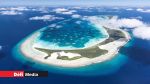







The Chagos Archipelago remains one of the most painful chapters in Mauritius’ modern history. From 1967 to 1973, Chagossian families were forcibly evicted and scattered across Mauritius, Seychelles, and the wider world. What began as a British plan for a naval base became, under American influence, a strategic military installation and perhaps a disaster recovery hub. To facilitate this, the British Indian Ocean Territory (BIOT) was created- an artificial construct designed to secure control over the Indian Ocean and its trade routes.
Today, the United Kingdom has announced sovereignty transfer to Mauritius while retaining Diego Garcia, and has even supported the creation of a so-called “government in exile” in London. Yet one fact is undeniable: Chagossians in Mauritius, Seychelles, and elsewhere have not been consulted.
THE QUESTION OF LEGITIMACY
International law is clear: a government requires territory, people, and boundaries. The “government in exile” lacks all three. It has no sovereign territory, no recognized boundaries, and its claim to represent Chagossians is contested. By contrast, Mauritius has been recognized by the International Court of Justice and the United Nations as the rightful sovereign over Chagos.
DECOLONISATION MUST BE COMPLETED
Mauritius has consistently maintained that the Chagos issue is not simply about sovereignty— it is about the completion of the decolonisation process. The UK’s continued control of Diego Garcia and its support for alternative exile structures amount to excuses that delay justice. Decolonisation is not negotiable; it is a legal and moral imperative. Mauritius wants this process brought to its rightful conclusion, with dignity restored to the Chagossian people and sovereignty fully respected.
THE NEED FOR A CHAGOSSIAN CONSULTATIVE ASSEMBLY
Mauritius can demonstrate leadership by creating a Chagossian Consultative Assembly. This body would:
• Represent inclusivity by bringing together Chagossians from Mauritius, Seychelles, and the diaspora. • Advise government policy on resettlement, reparations, and cultural preservation.
• Safeguard dignity by rooting decisions in lived experiences.
• Strengthen legitimacy by showing Mauritius’ sovereignty claim is participatory, not symbolic. PROPOSED STRUCTURE
• General Council: Representatives elected from Chagossian communities.
• Advisory Committees: Human rights, environment, cultural heritage, youth empowerment.
• Ceremonial Secretariat: Preserving identity through music, rituals, and collective memory.
• Government Liaison Unit: Ensuring direct communication with Mauritius and international bodies. The Chagos issue is not only about sovereignty - it is about justice, dignity, and the right of a people to be heard.
By establishing a Chagossian Consultative Assembly, Mauritius can show the world that it is committed to inclusive governance and human rights. The time has come to move beyond symbolic gestures and towards participatory justice. Sovereignty must be matched with dignity, dignity must be rooted in consultation, and consultation must complete the unfinished journey of decolonisation. Let the voice of Chagos rise not in exile, but in dignity restored.
By Dharamraj Deenoo

Notre service WhatsApp. Vous êtes témoins d`un événement d`actualité ou d`une scène insolite? Envoyez-nous vos photos ou vidéos sur le 5 259 82 00 !




![[Blog] Chagos, Justice, and the Call for a Consultative Assembly](https://files.defimedia.info/sites/default/files/styles/square_thumbnail/public/chagos_27_0.jpg?itok=7Iael2Pf)

